Soviet Aircraft Carrier Baku - 6 × SS-N-12 'Sandbox' SSM missiles (12 missiles), 24 × 8-cell SA-N-9 vertical SAM systems (192 missiles), 2 × 100 mm guns, 8 × AK-630 30 mm CIWS, 10 × 533 mm torpedo tubes, 2 × RBU-6000 anti-ship rocket launchers
In the Russian Navy and Navy from 1987 to 1996. In 1991, the ship was equipped with Admiral Flota Sovetskogo Soyuza Gorshkov (Russian: Адмира́л фло́та Сове́тсовШшо Сою́et of the Soviet Union).
Soviet Aircraft Carrier Baku
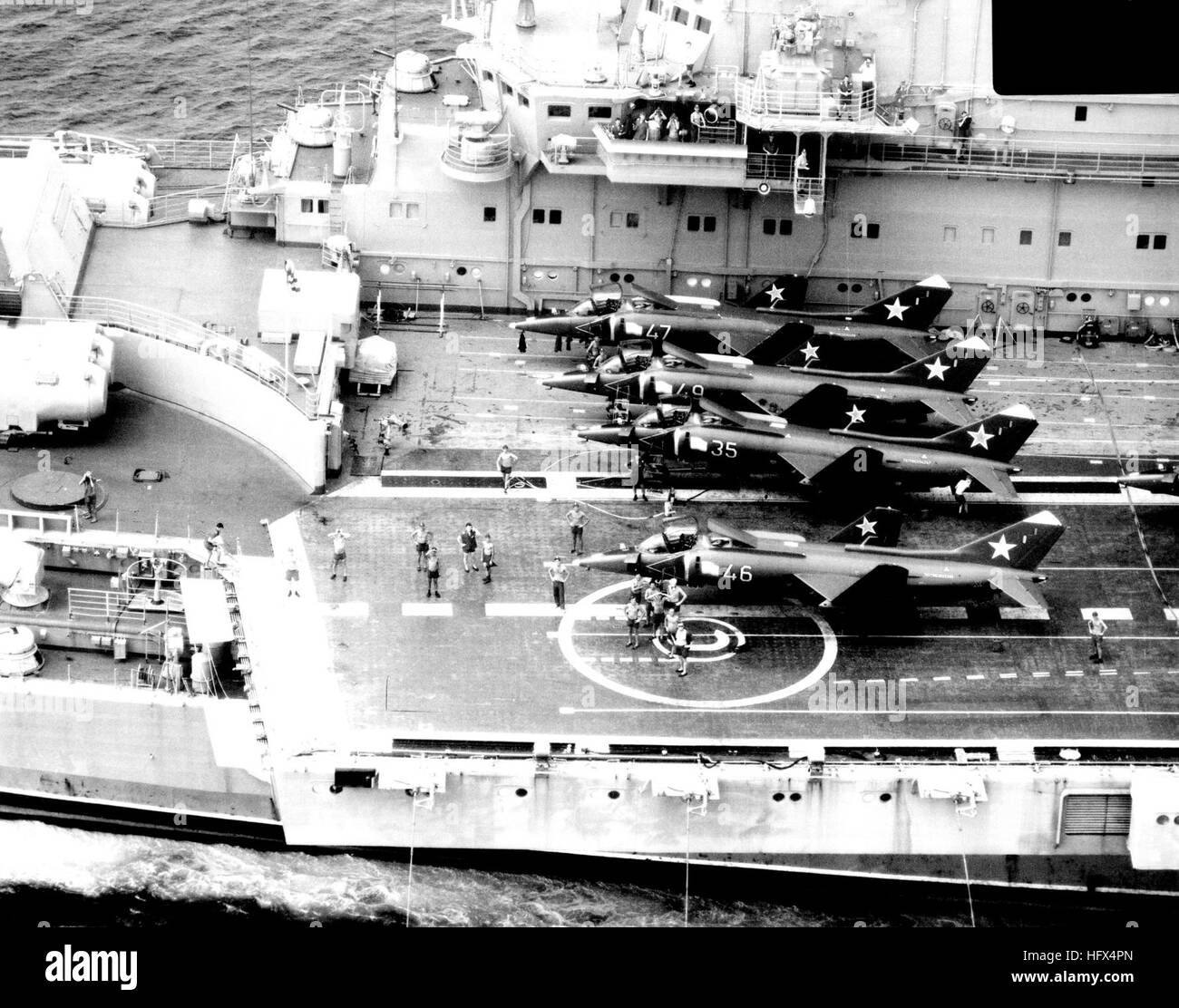
Baku is considered a unique class due to its refinements, including radar, phased arrays, extensive electronic warfare, and control and guidance. He was commissioned in 1982 and served from 1987 to 1991 in the Soviet Navy as Baku and from 1991 to 1996 in the Russian Navy as Admiral Gorshkov.
Kiev Class Aircraft Carrier
In 2004 the Gorshkov was sold to India with extensive modifications and improved performance as the new aircraft carrier INS Vikramaditya.
Launched in 1978 at South Nikolayev (Shipyard No. 444) in Ukraine, the ship was commissioned in 1982 and put into service in December 1987. The delay in launching is mainly due to software errors in the new control and guidance system. The ship was escorted by Admiral Gorshkov after the collapse of the Soviet Union in 1991, while Baku is now part of independent Azerbaijan. Sergey Gorshkov was in charge of Soviet naval expansion during the Cold War.
In 1994, after an explosion in the boiler room, the ship was grounded for a year for repairs. Although he returned to work in 1995, he was fired in 1996 and offered to sell.
On January 20, 2004, Russia agreed to sell Admiral Gorshkov to India after a major upgrade to Sevmash.
Why Did The Ussr Require Aircraft Carriers? Future Of The Russian Navy Aircraft Carriers
The fourth Project 1143 aircraft, which was carrying the Baku cruiser, differed significantly from the other students in testing the technology for use on the Admiral Kuznetsov. The most prominent feature is the large electronic display above the bridge. This is the antenna of the Mars-Passat class ("Sky Watch") space exploration radar. Sky Watch has a problem and is not working.
The biggest change in the weapon system is the replacement of the 4K60 (SA-N-3 'Goblet') and 9K33 Osa (SA-N-4 'Gecko') SAMs with the SA-N-9 'Gauntlet' VLS. . . This makes for two more 4K80s (SS-N-12 'Sandbox'). The two Kievs AA guns were replaced by 100mm guns and the SUW-N-1 was removed.
The wing is the same as the rest of Kiev, with 12 Yakovlev Yak-38 ('Forger') V/STOL fighters (until retired in 1992) Kamov Ka-27. ('Helix-a) two ASW/SAR helicopters and two Ka-31 ('Helix') early warning helicopters. The flight operations are supported by a special air navigation system. This article is about Kiev-class flights. For the school's leading aircraft, see Soviet aircraft carrier Kiev. For other boat classes, see Kiev class. For other ships, see Kiev (ship).
This article or section needs sources or references that appear in reliable, third-party publications. Please help improve this article or section by expanding it. (January 2013) (Find out how and how to delete this sample message)
Russian Aircraft Carriers: From The Cold War To Today
Kiev-class, Soviet research project 1143 Krechyet (gyrfalcon) is the first class of two fixed-wing aircraft carriers (Soviet-class heavy aircraft carriers) built in the Soviet Union for the Russian Navy.
Launched in 1970, the first Kiev-class submarines were based on the design of a full-body aircraft presented in the Orel project. The Navy originally wanted to fly a modern aircraft similar to the American Kitty Hawk. However, a small design of the Kiev stage was chosen because it was considered
Unlike many NATO aircraft carriers, such as most American or British aircraft carriers, the Kiev class is a combination of warships and aircraft carriers. In the Soviet Navy, this type of ship became known as "heavy aircraft" (Russian: Т постелые авианесущие крейсера) rather than just aircraft. The design allowed ships to cross the Turkish Straits, while the 1936 Montreux Convention prohibited aircraft carriers of more than 10,000 tons. 15,000 to cross.
The boat is designed with a large island style for table relaxation, with sides flying 2/3rds the length of the boat. The interior has heavy air-to-air weapons and surface-to-air missiles. The mission of the Kiev class is to support ships, surface-to-air missiles, other surface ships and naval aircraft; It has anti-aircraft, anti-ship and surface combat capabilities.
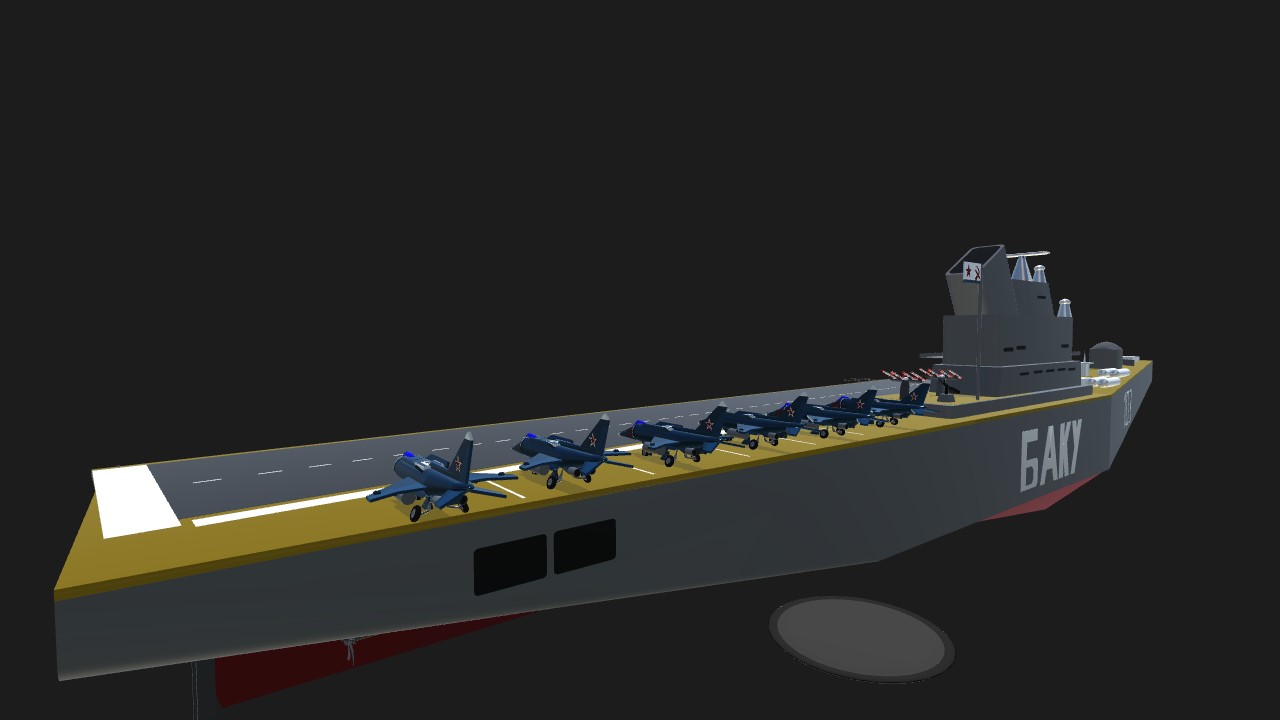
File:soviet Kiev Class Vstol Aircraft Carrier Baku.jpeg
The Soviet Union built and supplied all four Kiev aircraft for service in Soviet-Russian waters. The first two ships were sold to China as museum pieces and the third ship was scrapped. The fourth ship, Admiral Gorshkov, was sold to the Indian Navy in 2004 and, after years of modifications and upgrades, is now in service as INS Vikramaditya.
It was sold to a Chinese company in 1996, and became an amusement park in Tianjin since 2004. It has been maintained and developed into a luxury hotel since 2014.
Soviet aircraft carrier minsk, soviet aircraft carrier varyag, aircraft carrier lego set, soviet aircraft carrier kiev, charleston aircraft carrier, soviet carrier, aircraft carrier lego, aircraft carrier, soviet aircraft, aircraft carrier san diego, aircraft carrier museum ships, midway aircraft carrier

0 Comments